Responsible AI

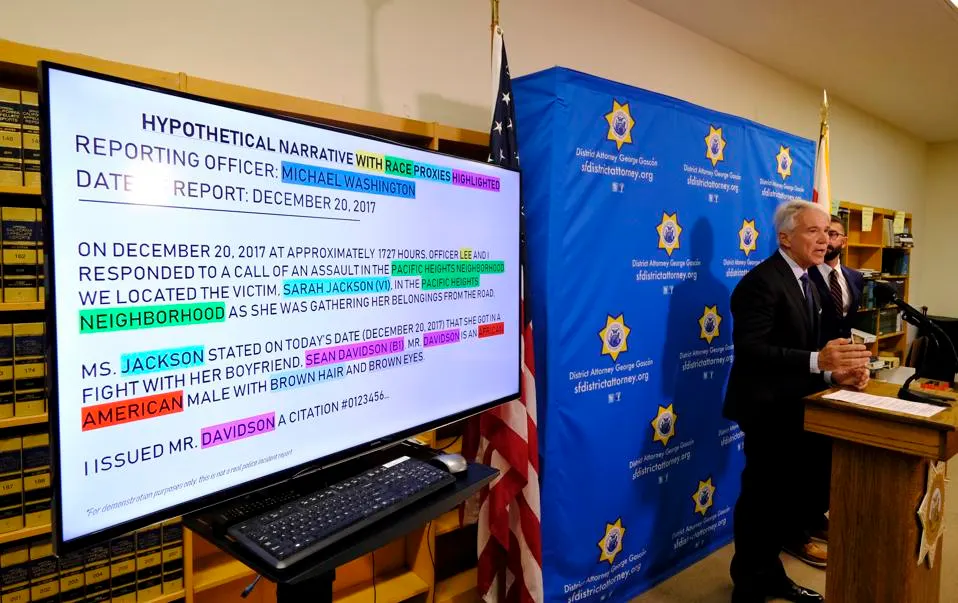
AI systems trained on historical data inherit historical inequities. When those systems are deployed at clinical scale, predicting which patients need intervention, which populations carry elevated risk, which deterioration alerts should fire, the hidden assumptions scale with them. Responsible AI is the discipline that makes those assumptions visible: auditing who the system fails, why it fails them, and whether we can explain and correct it before the harm compounds.

Working with a large multi-state health system in the United States, we deployed a model to predict care deferral: patients who would cancel or fail to appear for scheduled appointments (Ahmad et al., 2022). The model performed well by standard accuracy measures. But when we disaggregated its predictions by race and socioeconomic status, a pattern emerged — patients flagged as high-risk for deferral were disproportionately racial minorities. The algorithm had correctly identified a disparity. It could not explain one.

What happened next required something no model can do on its own. Working alongside clinicians, care coordinators, and community health workers, we set out to understand why these patients were deferring. What emerged was not a story about disengagement. These patients were primary caregivers — for children, for elderly parents, for partners with chronic illness — who could not take a half-day from work for an appointment. They were navigating scheduling systems built around a workday that assumed flexibility they did not have.

The solution was a mobile clinic: bringing care to the patients rather than requiring patients to come to the clinic. The program achieved a 12% reduction in deferral rate disparity across demographic groups, narrowing a gap that the model had identified but could not close on its own. The lesson was precise: machine learning can identify who is being left behind. Closing that gap requires understanding why — and that requires talking to people.

My research in this area spans three interconnected problems. First, fairness: AI systems trained on historical data inherit historical biases, and I study how those biases manifest across race, gender, age, and socioeconomic status in high-stakes settings, particularly healthcare (Ahmad et al., 2020; Ahmad et al., 2021). Second, explainability: a model that clinicians cannot understand is a model they cannot trust or correct, and I develop methods that make machine learning legible to the people who depend on it (Ahmad et al., 2018; Ahmad et al., 2019). Third, trustworthy LLMs: large language models introduce new failure modes (hallucination, confident error, catastrophic forgetting) that are particularly dangerous in clinical settings, and I am working on frameworks to detect and reduce them (Ahmad et al., 2023).

This work is motivated by a conviction: AI systems do not just reflect the world as it is. They shape the world as it will be. It has shaped regulatory frameworks for clinical AI (Ahmad et al., 2021), model reporting standards (Ahmad & Eckert, 2023), and research into algorithmic fairness in end-of-life decisions (Ahmad, 2025) and robust clinical decision support under uncertainty (Preuett et al., 2025). I am part of the Responsible AI Systems and Experiences (RAISE) initiative at the University of Washington. Building them responsibly is not a constraint on progress: it is what progress requires.

Algorithmic Fairness
Auditing ML models for disparate outcomes across demographic groups. Developing metrics and mitigation strategies for bias in healthcare prediction, criminal justice, and resource allocation.
Explainability & Interpretability
Building ML models that are transparent and understandable to clinicians, regulators, and patients. Identifying failure modes of post-hoc explanation methods, including imputation artifacts in SHAP and LIME.
Trustworthy Large Language Models
Addressing hallucination, confident error, and catastrophic forgetting in LLMs deployed in high-stakes clinical environments. Developing evaluation frameworks for LLM reliability in medicine.
AI Regulation & Governance
Examining how AI-based clinical tools should be classified and regulated as software medical devices. Engaging with FDA frameworks, international standards, and the ethics of algorithmic accountability at national scale.
fairMLHealth
Python · Open Source · KenSci Research
An open-source Python toolkit for measuring and reporting algorithmic fairness in clinical AI. Developed at KenSci Research, fairMLHealth provides a comprehensive suite of fairness metrics (statistical parity, equalized odds, calibration parity, predictive parity) together with bias detection utilities and standardized fairness reports designed for healthcare auditing contexts. The toolkit is built to work with common ML frameworks and is intended to make fairness evaluation a routine part of the model development lifecycle, not an afterthought.
GitHub →

2025

  1. arXiv
    algo_fair.png
    Algorithmic Fairness in AI Surrogates for End-of-Life Decision-Making
    Muhammad Aurangzeb Ahmad
    2025
  2. RLC
    partial-obs.png
    Reinforcement Learning under State and Outcome Uncertainty: A Foundational Distributional Perspective
    Larry Preuett, Qiuyi Zhang, and Muhammad Aurangzeb Ahmad
    In Reinforcement Learning Conference (RLC), 2025

2023

  1. arXiV
    AhmadTrust.jpg
    Creating trustworthy llms: Dealing with hallucinations in healthcare ai
    Muhammad Aurangzeb Ahmad, Ilker Yaramis, and Taposh Dutta Roy
    arXiv preprint arXiv:2311.01463, 2023
  2. Surgical Clinics
    showWork.jpg
    Show Your Work: Responsible Model Reporting in Health Care Artificial Intelligence.
    Muhammad Aurangzeb Ahmad, and Carly Marie Eckert
    The Surgical Clinics of North America, 2023

2022

  1. ArXiV
    AhmadDefer.png
    Machine Learning for Deferral of Care Prediction
    Muhammad Aurangzeb Ahmad, Raafia Ahmed, Dr Steve Overman, and 3 more authors
    arXiv preprint arXiv:2207.01485, 2022

2021

  1. ICHI 2021
    fairnessTutorial1.png
    Fairness in healthcare AI
    Muhammad Aurangzeb Ahmad, Carly Eckert, Christine Allen, and 3 more authors
    In 2021 IEEE 9th International Conference on Healthcare Informatics (ICHI), 2021
  2. KDD
    SAMD.png
    Software as a medical device: regulating AI in healthcare via responsible AI
    Muhammad Aurangzeb Ahmad, Steve Overman, Christine Allen, and 3 more authors
    In Proceedings of the 27th ACM SIGKDD Conference on Knowledge Discovery & Data Mining, 2021

2020

  1. KDD
    aiHealth.jpg
    Fairness in machine learning for healthcare
    Muhammad Aurangzeb Ahmad, Arpit Patel, Carly Eckert, and 2 more authors
    In Proceedings of the 26th ACM SIGKDD international conference on knowledge discovery & data mining, 2020

2019

  1. IJCAI
    aiImputation.png
    The challenge of imputation in explainable artificial intelligence models
    Muhammad Aurangzeb Ahmad, Carly Eckert, and Ankur Teredesai
    In AISafety Workshop at IJCAI, 2019

2018

  1. ACM-BCB
    AhmadInterpretable.png
    Interpretable machine learning in healthcare
    Muhammad Aurangzeb Ahmad, Carly Eckert, and Ankur Teredesai
    Proceedings of the 2018 ACM international conference on bioinformatics, computational biology, and health informatics, 2018

2021

  1. ICHI 2021
    fairnessTutorial1.png
    Fairness in healthcare AI
    Muhammad Aurangzeb Ahmad, Carly Eckert, Christine Allen, and 3 more authors
    In 2021 IEEE 9th International Conference on Healthcare Informatics (ICHI), 2021
  2. KDD
    SAMD.png
    Software as a medical device: regulating AI in healthcare via responsible AI
    Muhammad Aurangzeb Ahmad, Steve Overman, Christine Allen, and 3 more authors
    In Proceedings of the 27th ACM SIGKDD Conference on Knowledge Discovery & Data Mining, 2021

2020

  1. KDD
    aiHealth.jpg
    Fairness in machine learning for healthcare
    Muhammad Aurangzeb Ahmad, Arpit Patel, Carly Eckert, and 2 more authors
    In Proceedings of the 26th ACM SIGKDD international conference on knowledge discovery & data mining, 2020

2018

  1. ACM-BCB
    AhmadInterpretable.png
    Interpretable machine learning in healthcare
    Muhammad Aurangzeb Ahmad, Carly Eckert, and Ankur Teredesai
    Proceedings of the 2018 ACM international conference on bioinformatics, computational biology, and health informatics, 2018
  • AAAI · 2019–2020
    Co-Chair, Symposium on AI for Social Good
    AAAI Spring Symposium Series, Stanford University. Organized and led two consecutive years of invited talks, workshops, and panel discussions on AI applications in social good domains, with a focus on healthcare equity, criminal justice, and algorithmic accountability.
  • ACM FAccT
    Panel Organizer, Healthcare AI and Algorithmic Fairness

    ACM Conference on Fairness, Accountability, and Transparency. Organized a panel examining the specific fairness challenges of AI systems deployed in clinical and health system settings, including competing fairness criteria, disparate impact in prediction, and regulatory accountability.
Monoculture of the Mind
3 Quarks Daily · May 2026
Large language models are trained on the same data, optimized against the same benchmarks, and deployed to billions of people. I examine what it means for cognitive diversity when the infrastructure of thinking becomes a monoculture.
Read more →
Forbes
Forbes · August 2019
Featured in this piece examining the next frontier of AI fairness as the national conversation on race and criminal justice intensified. Interviewed about algorithmic bias, the limits of current fairness metrics, and what responsible AI in high-stakes decision systems actually requires.
Read →
Spark Dialog
Spark Dialog · August 2021
I discuss what AI can and cannot do in clinical settings, where the evidence is strong, where it is overhyped, and what equitable healthcare AI looks like in practice, including the fairness pitfalls that arise when models trained on historical data are deployed in clinical care.
Listen →
Digethics
Digethics · August 2021
I examine how data science and machine learning can identify and reduce health disparities, and the risks of perpetuating bias through poorly designed algorithms, including what responsible design looks like from data collection through deployment.
Listen →

For research collaboration, reach me at maahmad@uw.edu. For advisory engagements and responsible AI governance, reach me at vonaurum@gmail.com.